Monday, May 18, 2020

Reflections from the 2020 Paul Petzoldt Award Honoree

Now that the spring beauties, magnolias, and redbuds are busting out in Forgottonia, I find myself pondering the WEA Conference at Honey Rock of this late winter. It was a long one that has turned into a longer spring. Thanks again to the board, conference committee, and volunteers, for putting together such a wonderful program. Especially Rob, Mike, and all of Honey Rock staff for hosting with such kindness and thoughtful hospitality to our needs. Having been on the production side of conferences before, I appreciate how much work and midnight oil it takes to make it go. It is always good to get together in vivo to chat, compare notes, and commune with kindred spirit. 

It is especially important to stay connected with colleagues and fellow outdoor educators because we operate in such isolated venues and locations. Contending as we so often do with competition for scarce resources, I expect times will only get harder as the world attempts to address the emergent situation. I am reminded of the friends I have made through the association and the support both moral and practical they have rendered over the years. Keep these WEA friends and networks in mind as you try to solve the problems emerging from the COVID situation. Fulfilling our mission requires we get up close and personal with our students, campers, and clients. Sharing what ideas and information we have will help to weather the situation. Let’s Keep in touch!

Mike McGowan
2020 Paul Petzoldt Leadership Award Honoree and Keynote Speaker
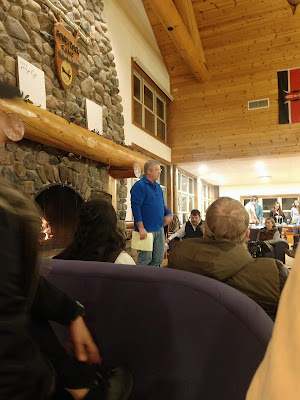
Jeff Tindal introducing Dr McGowan
Presented to Mike by long-time WIU colleague and friend, Jeff Tindall.

 
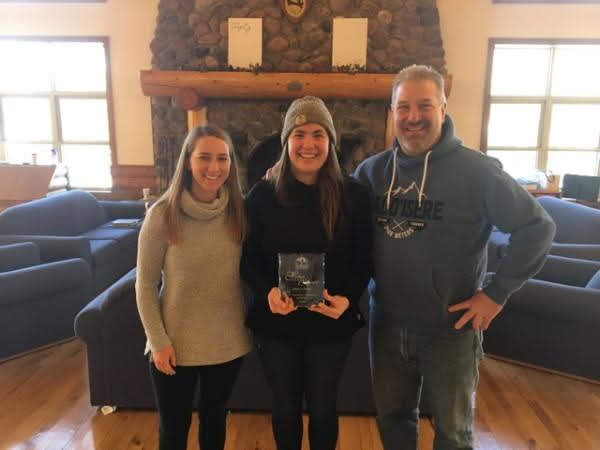
President Emily McKenzie presents the award
Award presented by WEA Board President, Emily McKenzie
 
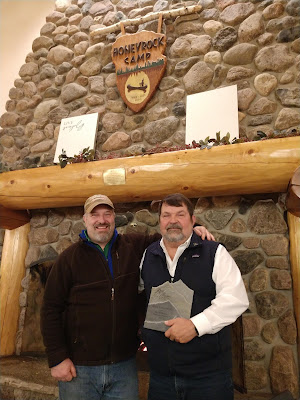
former-student Michael Odberg with Mike McGowan
Mike with former-student and HoneyRock conference host, Michael Odberg
 

Friday, May 15, 2020

Nominate Colleagues for Association Awards Honoring Excellence

In 2018 Dr. Andrew Bobilya received The WEA Certified Outdoor Educator Award at the conference held in Utah.  This was meaningful to him because he “believes in the work of the WEA and its potential to improve practice in wilderness education. Because of this and my commitment to integrating WEA curriculum in my courses, it is an honor to be recognized by my peers and the WEA. The award came as a surprise and was encouraging.”

When asked why others should nominate their colleagues and/or peers Andrew stated “These awards offer a wonderful opportunity to highlight the good work our colleagues are doing and to be an encouragement. I encourage all WEA members to consider nominating an individual or organization for at least one award this year.”


Thursday, April 9, 2020

6 Ways to Engage Environmental Integration

by Jess Port, of HoneyRock

Walk with a child into a forest, field, or wetland and you’ll quickly end up squatting down at their level, marveling alongside them at something seemingly insignificant at first glance. Walk with an adult through the same area though, and it’s far less likely that you’ll end up with your shoes kicked off walking through the dirt hunting for bugs.

HoneyRock lagoon in snow

HoneyRock cross-country skiing
Often, integrating environmental education into our programming can feel intimidating – particularly for those of us who don’t have tree and plant identifications stored away in our brains. However, environmental integration is about much more than identifying the tree that you bike past as an acer saccharum (sugar maple) or pointing out the edible wild plants around you as you hike down a trail. It’s also about opening one’s eyes to the environmental wonders surrounding them and harkening back to the marvel and wonder that we see spark so readily in kid’s eyes when they experience nature.

Having facilitated environmental lessons for a variety of ages from elementary schoolers experiencing the thick woods of Michigan for the first time to college-aged summer wilderness leaders going through training here at HoneyRock, I’ve picked up a few tricks along the way that can help re-kindle that sense of wonder and curiosity that can come with environmental integration in programming.

1. Get on their level

Kids have a unique perspective on nature simply because they are closer to the ground where there are so many things to see! It may look silly to the average passerby but on your next lunch break kneel by the base of a tree or waddle around a little patch of grass in the squatting position and see what you can find to marvel at.

2. Tune your senses

One of my favorite activities to facilitate with people to bring greater awareness to their senses is to have them “put their deer ears on.” Sit and listen quietly – how many things can you hear? Can you identify any of the sounds? Now, cup your hands behind your ears to catch those sounds waves better – what do you hear now? Or take a lesson from your dog and dab some water on your upper lip/beneath your nose to amplify your sense of smell.

3. Engage creativity

Draw, photograph, paint, or take a rubbing of something you find that intrigues you – keep a naturalist’s notebook or doodle these in the margins of your planner, checklists, or journal. Ask your staff and participants what analogies they can pull from the environment around them that tie into the lessons they are learning through your program.

4. Build enthusiasm

If we’re excited, others will be excited. Get stoked about the hard shell of the acorn that withstood hitting you on the head during your run this morning or the blue-colored berries that you found hiding in bushes in your backyard that mash into a purple paste. Share these discoveries with others!

5. Slow down and sit

Stare at a one by one square foot for at least five minutes – go for ten or more if you want a challenge. What do you notice? Boredom inspires curiosity, creativity, and observation. Take advantage of it.

6. Kick off your shoes – yes, even in the snow!

Feel the earth or snow or grass in between your toes. Feeling like a kid yet? Crab walk across a lawn or forest floor to get the full experience underneath your hands and feet.


The winter season here at HoneyRock has provided an excellent space for me to flex these muscles of wonder and curiosity and to develop my observation skills, encouraging me to press further into environmental integration in programming. Maybe it’s because of the quiet and soft light during the long golden hours before a winter afternoon sunset. Or because the landscape feels foreign and new (in an exciting way) when you’re surrounded by snow-covered pine trees towering over you. Or maybe it’s because of the way bird calls echo across the lake. Or the unique places you can access on snowshoes or cross-country skis that you wouldn’t get to on foot in the summer. Whatever it may be, it’s an exciting and unique place to rekindle one’s sense of wonder and curiosity and begin to integrate environmental observations into your life and, eventually, your programming.

Come visit HoneyRock this winter for WEA's 31st International Conference on Outdoor Leadership and re-kindle your wonder and awe!

Learn more about the Environmental Integration standards of WEA’s curriculum.

Thursday, November 7, 2019

Seeking Nominations for Awards Recognizing Excellence in Outdoor Leadership

Why Nominate for WEA Awards

In 1992, Dr. Mark Wagstaff received the Frank Lupton Service Award. The Lupton Award, named after the WEA founder and service-driven educator recognizes an individual who has been actively involved with the WEA for at least ten years. Recipients are recognized for their outstanding efforts to support the association: they serve as an outstanding ambassador of the WEA and make a significant impact on the association through service in volunteer roles on the Board of Directors, on committees, in fundraising, as a conference presenter, in curriculum development, and with JOREL contributions.
Receiving the award was meaningful to Mark because he devoted thee years of his professional life to the WEA to serve as the Executive Director. At the time he received the award, he had stepped down to pursue his doctorate degree at Oklahoma State. He really appreciated being recognized for his work and accomplishments during his tenure as Executive Director: it made him feel appreciated and valued. He urges today's members to nominate colleagues and peers. 
“At this point in time, it is paramount that individuals be recognized. The organization is driven by volunteers who donate significant time and energy into the organization. Nominating those who deserve recognition is a powerful way to honor individuals for their effort and commitment.”

Nominations for 2020 Awards are open now. Simple online nomination forms are available to all WEA members after logging into the WEA website member portal. 

Read more about the awards and see past recipients at https://www.weainfo.org/awards

Thursday, October 31, 2019

Who, Me?- Submitting Your Presentation Proposal

Shared by WEA Board Member and TCU Senior Consultant for Learning & Development, Cameron Potter

Why submit a presentation proposal?

Submitting a presentation proposal can be intimidating at first, but there are a number of reasons to push through the fear (or sloth) and submit. 2020 ICOL submissions close November 1!

1. Preparing a presentation proposal requires you to refine your thoughts.

Even the most tried and true ideas or practices merit a closer look. Walking through the mental process of presenting to others allows the opportunity to revisit, revamp, and retool your own ideas.

2. Presenting your ideas to others provides feedback, conversation, and networking opportunities.

Those that attend your presentation do so for a reason, often because the topic is interesting or appealing in some way. As a result, you get a room filled with like-minded individuals that are interested in discussing your topic with you!

3. Engagement

While you may not feel like an expert on everything, you have something to share or teach someone. Especially for those of us that don’t feel like we have it all figured out, presenting is an important step in moving forward. Engage others with your ideas, get involved in discussion and conversation, ask questions and engage others!

4. Build your network

Similar to engaging others, presenting connects you with others and provides easy conversation starters. Conversations lead to friendships, and friendships lead to a professional network that you can call to ask questions, get recommendations, or provide guidance.

5. Get the most out of the 2020 ICOL

Presenting allows you to participate on both sides of the conference – as a teacher and a learner. It provides opportunities to invest in others, natural avenues to build relationships, and may unlock funding opportunities through your institution.

Don’t hesitate, submit your presentation proposal today! 

Monday, October 21, 2019

Conference Memories Ep. 2: Guan Jang-Wu

Dr. Guan, friend, colleague, grad school comrade, WEA Certified Outdoor Educator, faculty at National Taiwan Sports University, and long-time WEA member writes about his favorite conference experiences and why he continues to support the WEA! 

Will Hobbs
_______________

Giving students an opportunity and platform to communicate with a group of great people from all over United States... a priceless learning experience.

 
I have been taking students to WEA conferences as part of my USA adventure travel course for many years. It has always been a great experience for me and my students. I think the best part of WEA is giving students an opportunity and platform to communicate with a group of great people from all over United States. People share their cultures, stories, explore different perspectives and find common grounds. From a teacher’s viewpoint, it was a priceless learning experience. 

For me personally, WEA conference is a great venue to connect with new and old friends, learn new things from best teachers in the outdoor field, and have a great time at the evening social. These memories will last forever!

Guan Jang-Wu, Ph. D.


Tuesday, October 15, 2019

Conference Memories Ep. 1: Steve Spencer

If you don't know Steve, or "Doc" as his students have always called him (to his face), then you are in for a treat. The anecdotes are legendary; he's written a collection of stories as "Dr. Odell Buckenflush", recently retired from teaching at Western Kentucky University, and is refurbishing a house in the Ozarks with his wife Debbie. He also likes canoes. Steve hung out with Paul Petzoldt on the first WEA Professional Short course (led by Jack Drury and Mark Wagstaff) in 1991, and he quickly progressed through the WEA instructor ranks while leading courses at WKU. He has served on the WEA Board, received the Frank Lupton Service Award, and is now a Lifetime Member of the WEA - so we're stuck with him. 

He's my mentor and hero so I asked him to recount a few of his strongest memories from WEA conferences (now that he's old and retired, I use the word "strongest" loosely).

Will Hobbs
_______________

Memories of WEA Conferences Past

One [memory] has to be the auction that the guy from CCO in Pennsylvania led (I can't remember his name...Dave? Paul [Harbison] or Francois would know). He had the crowd rolling with laughter and I bought some of Cheryl [Teeter's] moose underwear and put them on while on stage. 

At another conference, Paul [Petzoldt] was signing his mountaineering posters for my sons, Beau and Ty, and he got pissed because he wrote the wrong name on the poster... He said, "Well, $*%&*!" and tore it up while sitting at the table. Afterwards it was pretty funny, but I remember when it happened it caught me off guard. 

It was a big surprise when I received the Frank Lupton Service Award around 2006. I was totally surprised and as I went up on the stage to receive it, Jack Drury was yelling, "Speech! Speech!"... I couldn't have talked if I wanted to. 

But more than any single conference event or memory, I just think the social contacts and acquaintances of folks in the field blur into really enjoyable memories that were the highlight of my career. In my previous life "as a college football coach," the annual coaches' conferences were full of guys who had been fired and were scrambling for jobs, so it was never an enjoyable social time with no shared knowledge. 

At WEA conferences, I always left with something beyond the social networking that I could apply in my teaching. "For when you stop learning, you begin to die."  

Dr. Steve Spencer


Reflections from the 2020 Student Award Honree

It was a treat to both attend the WEA conference and help in the background as a HoneyRock grad student/staff member this past spring. This ...